
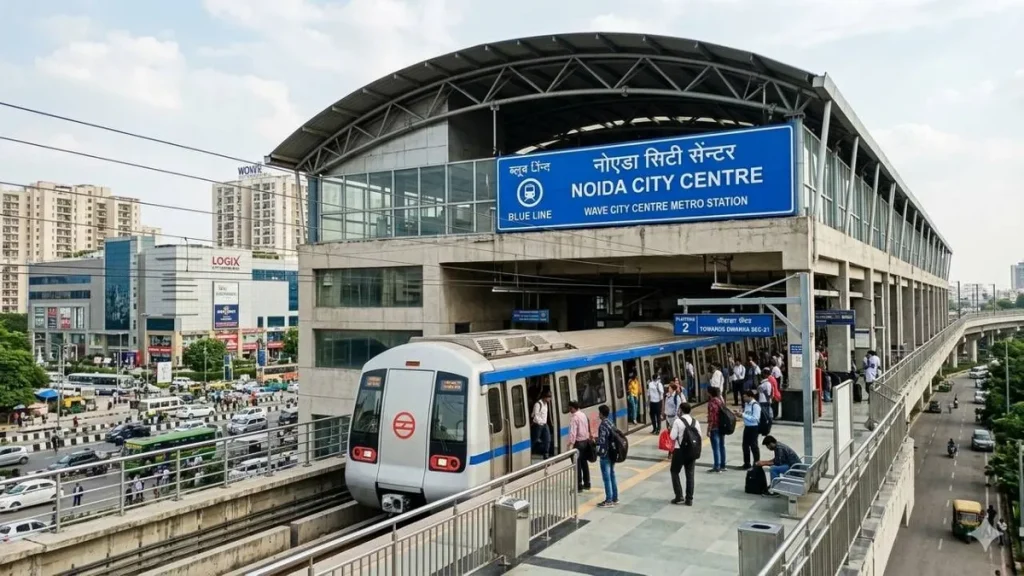
Location: Noida & Greater Noida (Uttar Pradesh), India
Transit Operator: Noida Metro Rail Corporation Limited (NMRC)
Scope: Design, supply, installation, commissioning, and 10-year maintenance of a National Common Mobility Card (NCMC) / RuPay-compliant, EMV-based, open-loop AFC system
The Challenge: From Tokens to True Smart Mobility
Before this project, India’s metro systems largely relied on proprietary, closed-loop tokens and smart cards, or simple paper tickets, which limited interoperability and convenience. NMRC’s challenge was twofold:
- High Transaction Costs: Avoid the operational complexity and cost of managing millions of tokens and proprietary closed-loop cards.
- Lack of Seamless Integration: Implement a future-proof solution that could enable true “One City One Card” mobility, allowing commuters to use a single card for metro, city buses, parking, and general retail transactions across Noida.
The Aurionpro Solution: Open-Loop EMV & QR Code Pioneer
| System Component | Implemented by Aurionpro |
| Core Platform | Open-Loop NCMC Compliance: The AFC system and back office were built on open-loop standards, enabling the acceptance of any NCMC/RuPay-compliant bank-issued debit/credit/prepaid card. |
| Fare Media | RuPay Contactless Smart Card: A co-branded EMV/RuPay card was issued by SBI (the banking partner) that functions as both a transit pass and a standard debit/prepaid card for non-transit purchases. QR-Code Ticketing: Integrated the industry-first use of mobile and paper-based QR codes for single and return journeys, replacing expensive tokens. |
| Infrastructure | Next-Gen AFC Gates: All 21 stations were equipped with high-throughput automatic gates featuring validators capable of reading EMV contactless cards, QR codes, and mobile applications. Multi-Modal Readiness: The architecture was designed to seamlessly extend the “One City One Card” concept to integrate Noida city buses, parking lots, and utility payment kiosks. |
| Back Office | Central Clearing House System (CCHS): Implemented the core clearing and settlement infrastructure required for a multi-operator, multi-application open-loop payment environment, ensuring accurate and transparent revenue sharing. |
CCHS/Backoffice
- Transaction Management: Acquires, validates, and processes all transactions (metro usage, recharges, refunds) from all sources (gates, TOMs, buses, parking).
- Financial Reconciliation & Settlement: Processes clearing and settlement files with the Financial Institution (FI)/Acquirer to ensure all revenue is correctly attributed and settled (paid out).
- Configuration Management: Stores and downloads all business rules, fare tables, user access parameters, and software updates to all front-end devices (gates, TVMs, ETMs).
- Security & Fraud Management: Manages Hotlists (blacklists) for compromised cards/tickets and distributes this list across the entire network to mitigate fraud.
- MIS Reporting: Generates audit, ridership, revenue, and equipment status reports for NMRC management.
- External Interfaces: Acts as the communication bridge connecting the transit network to the FI/Acquirer switch (for card transactions) and NMRC’s SAP ERP system.
Project Impact
- Cost Efficiency: The shift to QR-code and open-loop ticketing eliminated the high capital and maintenance costs associated with proprietary tokens and closed-loop card management.
- Enhanced Customer Experience: Commuters gained the convenience of using their existing bank cards (or the co-branded card) for travel, eliminating long queues for ticket/token purchase and providing a hassle-free, single-card solution for transit and retail.
- A “One City One Card” Reality: NMRC achieved its goal of pioneering a seamless, multimodal payment ecosystem that extends beyond the metro to city buses, parking, and utility payments, setting a national benchmark for urban mobility.